

Some two thousand years ago, God became a man. It was a miracle unlike any other. God had always worked through human messengers, men who represented Him to His people, but now He Himself came in the flesh to bring the message to His people. Theologian Wayne Grudem writes of this miracle on page 563 in Systematic Theology: “It is by far the most amazing miracle in the whole Bible – far more amazing than the resurrection and more amazing than the creation of the universe. The fact that the infinite, omnipotent, eternal Son of God could become man and join Himself to a human nature forever, so that infinite God became one person with finite man, will remain for eternity the most profound miracle and the most profound mystery in all the universe.” The incarnation was the ultimate revelation as God condescended to make Himself known in a form we could more easily comprehend. The incarnation is relational. The God-Man Jesus occupied a unique position necessary for the accomplishment of redemption. The incarnation is ongoing as the Firstborn of the new creation is bodily at the Father’s right hand as our High Priest. When we come to talk of these things, we are speaking of mysteries; we know a little, but the fullness of the knowledge eludes us. Not because we lack anything to inform us, but we simply are not able to hold all the truth in our hearts and minds. The words we have cannot do justice to the wonders God has wrought. We are trying to hold the ocean in a bucket. Therefore, I will not exhaust my readers with an excess of terminology, analogies, phrases, and the like. Wiser men than this humble writer have filled volumes delving deep into the mystery as God has given them wisdom to do so. I aim to simply set us out on a journey of exploration, to suggest thoughts, to remind us of glorious truths. I wish to give us a little help in appreciating what God has done.


The Incarnation of Jesus Christ
The Incarnation as Revelation
John 1:14: “And the Word was made flesh, and dwelt among us, (and we beheld his glory, the glory as of the only begotten of the Father,) full of grace and truth.”
Human beings are designed to operate in the four dimensions of height, width, depth, and time. God transcends all of these. Then the second person of the Holy Trinity took on flesh and somehow fit the truth of God into the four dimensions we readily perceive. John the apostle was being quite literal when he wrote that we beheld Christ’s glory. Through his account and those of the other eyewitnesses, we still behold Christ’s glory.
The combination of man and God in one being (referred to by theologians as the hypostatic union) is difficult to understand. We often hear the language of fully God and fully man, but R. C. Sproul argues that we should say truly God and truly man. This harkens back to the language of the Chalcedonian Creed, helping us to understand who Jesus truly is. He is truly God; to know Christ is to know God. See John 14:9: “Jesus saith unto him, Have I been so long time with you, and yet hast thou not known me, Philip? he that hath seen me hath seen the Father; and how sayest thou then, Shew us the Father?”
Jesus is truly a man, facing all the temptations common to mankind.
Truly God and truly man avoids the tricky notions of percentages, capacities, and quantities. All of that misses the point, Christ was in all actuality both God and Man. He was not partially God and partially man; He was truly both at once. The language of fullness is found in nearly all English Bible translations in Colossians 2:9, but Paul’s point is not quantitative, but qualitative: “For in him dwelleth all the fulness of the Godhead bodily.”
Paul is saying that nothing was lacking in Christ so that He perfectly reveals God in His human form.
So, we have a man whom we can see, hear, smell, and touch. And as we are truly seeing God, when we listen to Him, we’re hearing God; when He touches, God touches us. This is something we can understand. He is approachable. He approached us. Emmanuel, God with us in the flesh. This is an incredible demonstration of God’s loving kindness towards us.
If Jesus were not truly God, there would be no special revelation here; he would be reduced to another prophet. He would be an imperfect revelation just as Moses, or Daniel, or Paul; something would be lacking. We would not have beheld the glory, only a reflection, a portion of the glory.
If Christ had not been a man, then revelation would not be so wonderfully accessible to us. We would be left with unanswerable questions in regards to how this drawing near of God should be taken. Just how close did He come? What do we make of the example of His existence on Earth if that existence was unlike our own?
Even if this least aspect of the incarnation, if one truth or the other is rejected, the whole collapses into meaninglessness. When it comes to Christ’s person, exactness makes all the difference. This only becomes more profoundly relevant as we move onto the greater aspects of the incarnation.
The Incarnation and Redemption
1 Corinthians 15:21-22: “For since by man came death, by man came also the resurrection of the dead. For as in Adam all die, even so in Christ shall all be made alive.”
See also Romans 5:12-21: “Wherefore, as by one man sin entered into the world, and death by sin; and so death passed upon all men, for that all have sinned: (For until the law sin was in the world: but sin is not imputed when there is no law. Nevertheless death reigned from Adam to Moses, even over them that had not sinned after the similitude of Adam’s transgression, who is the figure of him that was to come. But not as the offence, so also is the free gift. For if through the offence of one many be dead, much more the grace of God, and the gift by grace, which is by one man, Jesus Christ, hath abounded unto many. And not as it was by one that sinned, so is the gift: for the judgment was by one to condemnation, but the free gift is of many offences unto justification. For if by one man’s offence death reigned by one; much more they which receive abundance of grace and of the gift of righteousness shall reign in life by one, Jesus Christ.) Therefore as by the offence of one judgment came upon all men to condemnation; even so by the righteousness of one the free gift came upon all men unto justification of life. For as by one man’s disobedience many were made sinners, so by the obedience of one shall many be made righteous. Moreover the law entered, that the offence might abound. But where sin abounded, grace did much more abound: That as sin hath reigned unto death, even so might grace reign through righteousness unto eternal life by Jesus Christ our Lord.”
As a man, Christ can stand as a representative of mankind. A new and better Adam, the federal head of a reborn race of humanity. As God Christ could satisfy the penalty for sin once and for all. If either nature were lacking in any way, redemption is impossible. Truly God, truly man, truly the only Savior for sinners.
As a true man, Jesus faced all the adversities that come with finitude. He got hungry and thirsty, and tired. He felt pain, His body broke, and He died under the persecution and crucifixion. He felt rejection as we do; He felt trepidation in the garden. He was tempted as we are. Yet, in his humanity, Christ never sinned. He was holy, and the sins He died for were not His own: they were ours. If Christ were not truly a man, He could not truthfully represent us. His life would not have been like our lives, and His sinlessness would mean much less to us.
As true God, Jesus faced His own holy wrath on the Cross; He satisfied the judgment of the Trinity as only He could. His divine soul was infinitely valuable. The impossible miracle of God embodied allowed the unthinkable spilling of divine blood to wash clean the stain of sin. If Christ is not God equal in every way to the Father and Holy Spirit, His sacrifice would not be sufficient.
The incarnation is the greatest miracle in the redemptive work, greater even than the resurrections. That later restoration of life depended upon the wonderfully unique life of the incarnation. In this way, the birth of Jesus is more than a prelude to His redemptive work; it is the magnificent opening of the climactic act.
Incarnation Eternal
Hebrews 4:15: “For we have not an high priest which cannot be touched with the feeling of our infirmities; but was in all points tempted like as we are, yet without sin.”
See also Hebrews 6:19-20: “Which hope we have as an anchor of the soul, both sure and stedfast, and which entereth into that within the veil; Whither the forerunner is for us entered, even Jesus, made an high priest for ever after the order of Melchisedec.”
Jesus never shed His humanity; He is forever one of us. As a man, He stands at the Father’s right hand today interceding for His human siblings. He will never leave this position as our intermediary with our Father in Heaven. Nor will He ever be distanced from us.
If our Lord were to lay aside His humanity, we have only the pity of God. However, He remains human, and so we enjoy the sympathy of God. He does not forget what we deal with, what it is like. He always identifies with us in the most profound way possible. What happened on that first Christmas is the gift that keeps on giving. Christ is ours forevermore.
If Christ were not God, His standing would not be equal to the Father or the Holy Spirit, His authority would be secondary, and His promises might be vetoed. Christ would be no greater in His position than any other priest. Indeed, if Jesus were not God, He had not assumed His position by His own accord from eternity past.
Now, if Jesus were not a man, what advantage do we gain through His position? He would not be our brother in the fullest sense. His relationship would be such that we might well require some priest to go between us and Him. He would not be so near or so dear to us as He is.
Oh, the wonders of God’s wisdom, that He has become precisely the person we have always needed. One of Us, and also our God. Lacking nothing in Humanity or in Divinity, the one true bridge that has spanned the chasm. Emmanuel drew near to us in the most beautifully profound way to draw us near to God. The paragon of humility, Jesus Christ, descended to our lowly level, and now we might ascend to His glorious height by grace through faith.
See Philippians 2:6-11: “Who, being in the form of God, thought it not robbery to be equal with God: But made himself of no reputation, and took upon him the form of a servant, and was made in the likeness of men: And being found in fashion as a man, he humbled himself, and became obedient unto death, even the death of the cross. Wherefore God also hath highly exalted him, and given him a name which is above every name: That at the name of Jesus every knee should bow, of things in heaven, and things in earth, and things under the earth; And that every tongue should confess that Jesus Christ is Lord, to the glory of God the Father.”
For Further Reading
As I said at the start, there is a library’s worth of truth to unpack in the person of Christ. For those who wish to go deeper, a worthy and worthwhile venture, here are a few good books that will help you. The person of Christ can be a heady topic, which led many to compromise the truth to accommodate their sense of rationality. The Council of Chalcedon confronted such errors, and reading that document is as good a place as any to start unfolding this teaching.
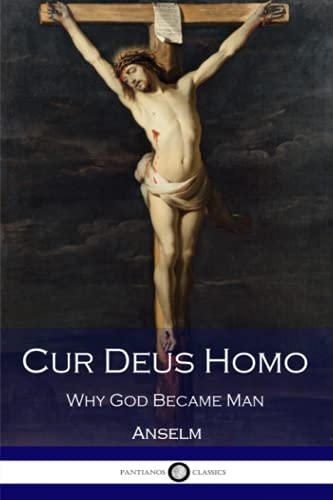
On the Incarnation by Athanasius is a foundational text written by one of the most outstanding Church Fathers. Anselm of Canterbury’s Why God Became Man is a classic. For a modern treatment, Stephen Wellum’s The Person of Christ: An Introduction is quite good, as is his volume God the Son Incarnate: The Doctrine of Christ.
Conclusion
When Christ became a man, He accomplished much. His accomplishments began and were crowned in earthly ministry, but continue to this day and will continue forever and ever, amen. He made God known to us as God had never been made known before. He became our substitute and our representative. He became the perfect intercessor for us. Christ was everything we required; we need nothing else for our full salvation but Christ Alone.

Lord's Library participates in affiliate programs. We may make a small commission from products purchased through this resource.

- Does God Promise Christians Wealth and Prosperity? - October 16, 2026
- Why Does God Allow Some People to Live and Others to Die? - October 16, 2026
- How to Know God’s Love According to the Bible with Commentary - October 13, 2026


